Tooling transfer & repair
A new home for
your existing tooling.
Your tool doesn’t need to start here to run here.
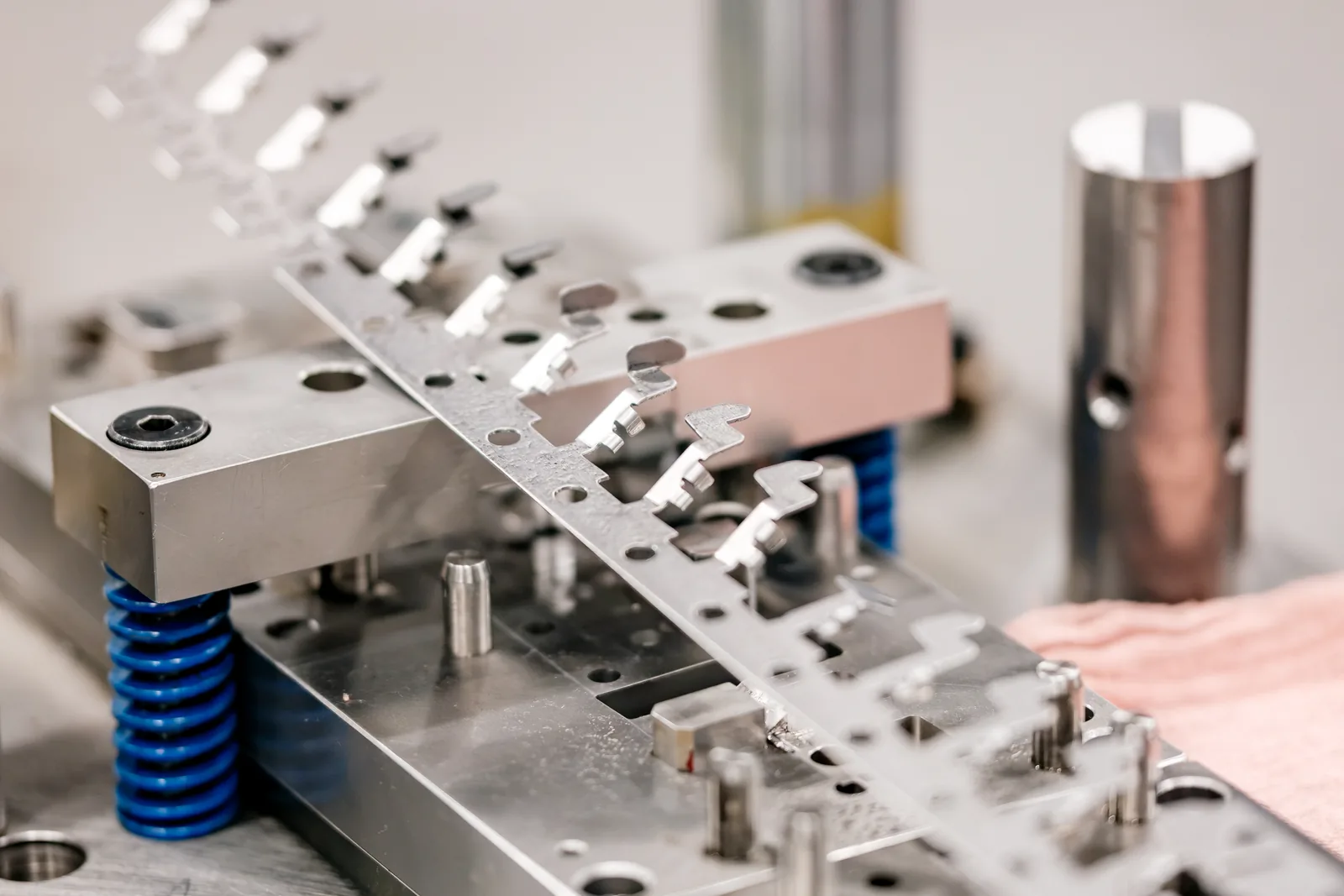
Built by another shop? We can evaluate, reverse engineer, troubleshoot, and repair your tooling, then run production on our 45 to 150 ton presses. One team to understand the problem and see the work through.
Working tool or problem tool. Let’s look at what you have.
Since 1972
Family-owned manufacturing
In-house toolroom
Engineering, repair & support
45–150 ton
Progressive stamping presses
ISO 9001:2015
Certified quality system
A better path forward
When your current setup is holding you back.
Missed dates, limited capacity, and unresolved tooling problems put pressure on your business. Bring us the challenge. We’ll help you understand your options.
Delivery dates keep slipping.
A production plan you can work with.
We review your required dates, current demand, and the work the tool needs so repair timing and production scheduling are part of the same conversation.
Your supplier can’t keep up.
Capacity reviewed against your demand.
We evaluate press fit, material, run requirements, and expected volumes up front to establish whether your program fits our production environment.
The same tooling problem keeps returning.
Engineers and toolmakers who can investigate.
Troubleshooting, reverse engineering, die repair, Wire EDM, and CNC machining give us multiple ways to address the source of a tooling issue.
Too many shops. Too many handoffs.
One shop from evaluation to shipment.
Engineering, toolmaking, stamping, inspection, and assembly capabilities work together in one facility, with outside services coordinated when the job requires them.
The transfer process
From the tool you have
to the parts you need.
A careful handoff starts with understanding your tool. Here’s how we evaluate the work, agree on a plan, and move toward production.
You know what we recommend, why it matters, and what comes next.
Review & receive
Understand your part, your tool, and your production needs.
We review available drawings, sample parts, material, volumes, and delivery requirements. Equipment compatibility and capacity come first. Once the transfer is coordinated, we receive and inspect the tooling to understand its condition.
Diagnose & recommend
Find the cause. Build a practical plan.
Our engineers and toolmakers investigate wear, damage, and recurring production issues. We identify needed repairs and opportunities for improvement, then review the proposed work, costs, and timing with you before proceeding.
Repair & improve
Put in-house tooling expertise to work.
We complete the agreed repairs and modifications using our toolroom, Wire EDM, and machining capabilities. Where documentation is missing, we evaluate reverse engineering from the existing tool, components, and sample parts.
Prove the process
Make trial parts. Check them against your requirements.
We set up the tool, run trial parts, and inspect them against the drawing and agreed requirements. Findings guide any further adjustments, with sample review and required approvals before production release.
Produce & support
Run production with the team that knows your tool.
Your tool moves into scheduled production with documented setup and inspection requirements. Toolmakers, production staff, and quality personnel work together on ongoing maintenance, troubleshooting, and consistent part quality.
A one-stop manufacturing partner
One shop. Every step.
The people who evaluate and repair your tool work alongside the people who run it and inspect the parts. That connection helps us address issues, share what we learn, and take pride in the work that leaves our floor.
Before you move your tool
A few questions you may have.
Every tool has a history. We’ll work with you to understand yours.
Can you work with a tool another shop built?
Yes. We evaluate customer-owned tooling built elsewhere for troubleshooting, repair, improvements, and production. We first review the tool’s condition, the part requirements, and compatibility with our equipment to determine the right path forward.
Does my tool need to be broken to transfer it?
No. You may have a working tool and need a new production partner, additional capacity, or more complete support. If the tool is suitable for our equipment and production needs, we can discuss a transfer without assuming it needs repairs.
What if drawings or CAD files are incomplete?
Share what you have: part drawings, sample parts, photos, tooling details, and any known production issues. We can evaluate whether reverse engineering can help fill the gaps and explain what additional information or work is needed.
How long does a tooling transfer take?
Timing depends on tooling condition, equipment fit, repair scope, material availability, sample approvals, and production capacity. We review those factors with your delivery needs and discuss a practical schedule after evaluating the program.
Let’s look at your tool
Bring us what you have.
Let’s work out what’s next.
Tell us what’s working, what isn’t, and what you need from your next manufacturing partner.
Discuss Your ToolHelpful information to get started
- Part drawings, CAD files, or sample parts
- Tool photos, dimensions, and available records
- Material specifications and expected volumes
- Known issues and recent production history
- Target delivery dates and transfer timing
Don’t have everything? Start with what’s available. We’ll discuss what else is needed.